Platform · Alerts
Alerts that do something, not just ring.
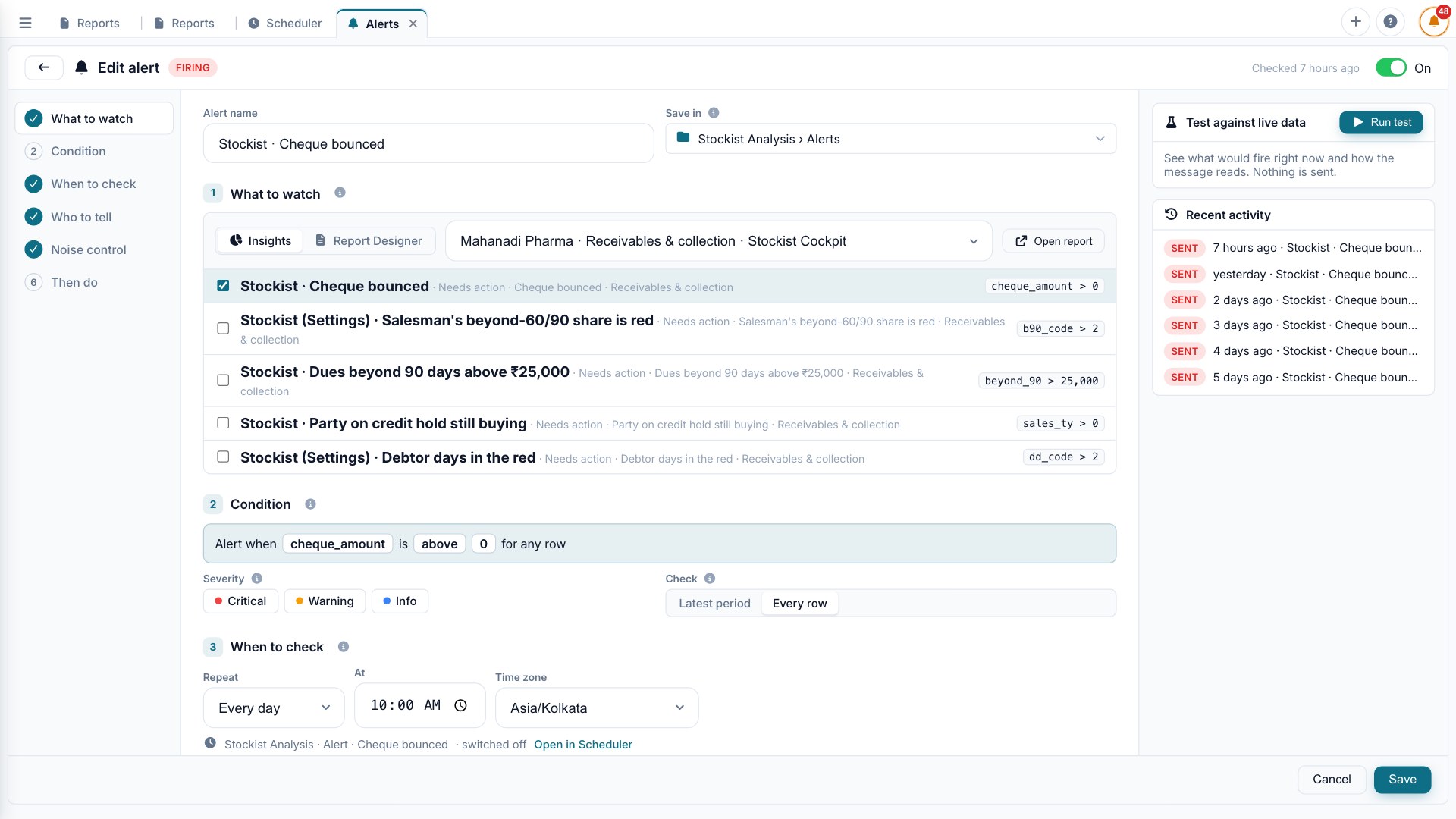
Set a rule on any number: a payment overdue, stock about to expire, a customer gone quiet. When it fires, Marut tells the right person and can send the reminder or start the approval for them.
Problems are found in the monthly review, weeks after they started costing money.
Rules on any number, with limits the business sets, that notify the right person the moment a line is crossed.
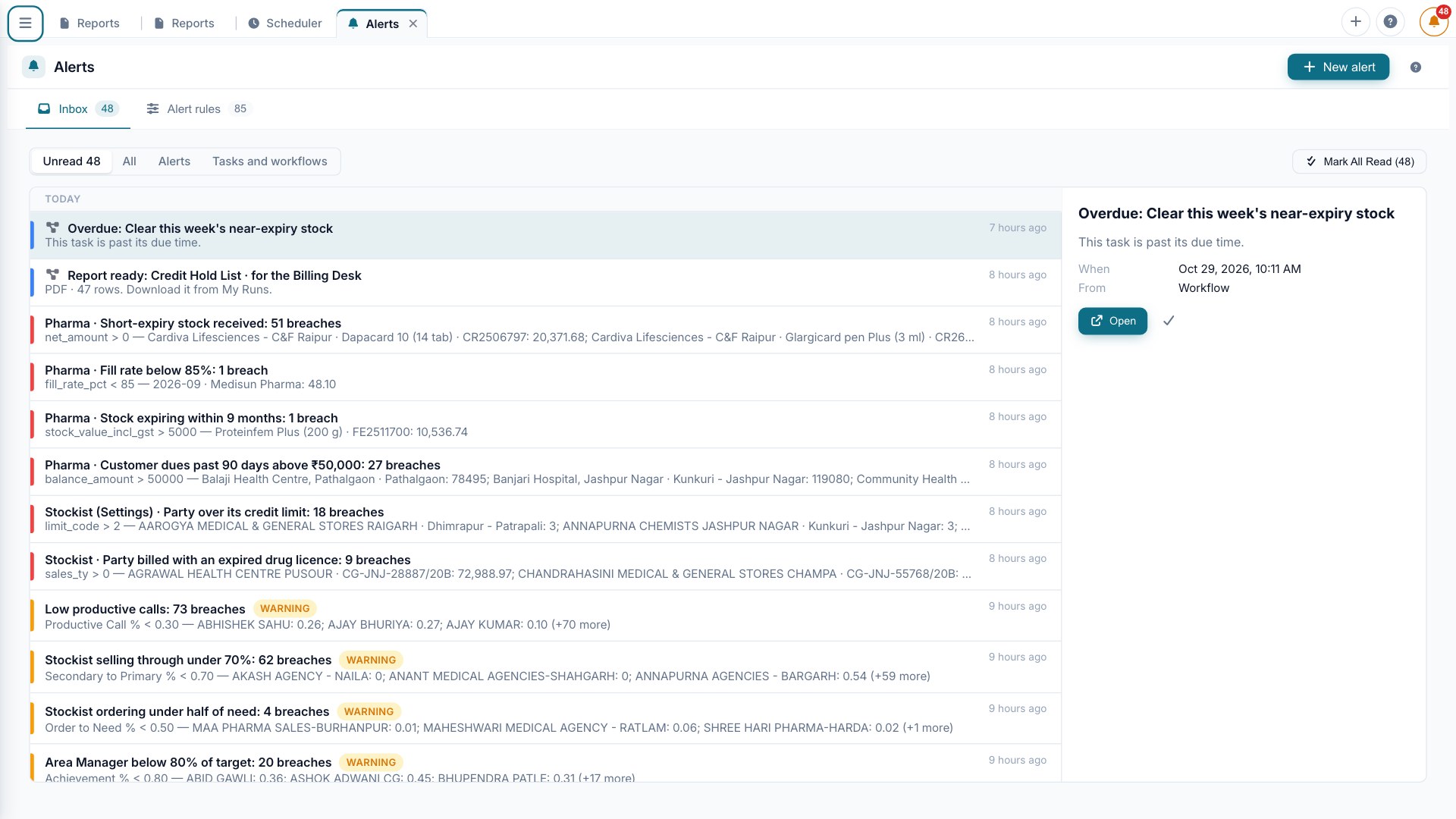
The person who can act hears first, with the number and the reason, not a chart to decode.
What you can do
Alerts, in practice.
Pick a measure, a condition and who should know.
Send a reminder, raise an order or open an approval in one tap.
Group, snooze and rank alerts by money at stake.
Inbox, phone notification, email or message.
A typical day
A cheque bounces at 11:00. By 11:05 the customer has a polite reminder and the sales rep has a note to call.
Questions
Alerts, answered.
Who sets the limits?
The business, on the page, without IT.
Where does an alert arrive?
On the dashboard, in the app, by email or as a message on the phone.
Can an alert explain itself?
Yes. It carries the number, the limit and the likely reason.
Can an alert start an action?
Yes. It can draft a reminder or route an approval; a person confirms before anything is sent.
Will I be flooded with alerts?
No. Alerts are ranked, grouped and sent to the one person who can act.
Connect the data. Understand the business. Act with confidence.
Hand us your data on Monday. Decide better by Thursday. No six-month project, no slideware.